

Last updated October 2026
In London the hard part of a padel project is the borough, not the build. Barnet refused one scheme on Green Belt grounds and then approved it once the canopies came out, while Hounslow is spending its own capital on six courts. We design and build the courts and run the borough application in the same contract. LTA 2025 figures put a single floodlit outdoor court at about £71,000 in London as elsewhere, ex VAT and fees. Send a site plan or postcode and we will tell you what that borough is likely to ask for.
Which London boroughs have approved or refused padel courts?
Four London boroughs have recorded decisions that shape how we plan a scheme, and they point in different directions.
| Borough | Scheme | Outcome |
|---|---|---|
| Barnet | Ref 25/0235/FUL | Refused because fencing and canopies were inappropriate in the Green Belt |
| Barnet | Ref 25/3670/FUL | Approved after the canopies were removed |
| Hounslow | 6 courts at Hanworth and Isleworth leisure centres | Council funding of £950,000 approved 20 January 2026 |
| Croydon | 9 courts in six temporary structures, Addiscombe Road | Meanwhile use, permitted for up to 10 years |
| Hammersmith and Fulham | Ref 2019/01504/FUL | Refused: enclosures a “discordant feature”, plus noise |
What it changes: there is no single London answer, so the borough and the land designation decide the design before anyone orders a court.
Can courts go on Green Belt land in outer London?
Barnet’s two decisions show it can, but usually without a roof. The first application failed because the fencing and canopies harmed the Green Belt; the revised scheme without canopies was approved. On Green Belt sites in outer boroughs we therefore price and draw an open-air layout first and only add cover where the pre-application response allows it. Our padel court canopy page explains what a roof adds to cost and height.
Should a London club or leisure centre convert tennis courts?
Hounslow’s programme makes the case with numbers. On 20 January 2026 Hounslow approved £950,000 to convert two of the four tennis courts at Hanworth and at Isleworth leisure centres into three padel courts each. It had recorded tennis occupancy 27% below pre-pandemic levels and projects £1.4 million of extra income over four years. Lampton Leisure will run them, with opening planned for spring or summer 2027.
For a club with quiet courts, usage records like Hounslow’s are the evidence a council and Sport England look for when playing space changes use. How two tennis courts become three padel courts is explained on tennis court to padel conversion.
Can a vacant London plot take padel on a temporary permission?
Croydon has shown that a council will grant one. At 1-5 Addiscombe Road, a former Royal Mail delivery office demolished in 2022, Croydon Council allowed nine enclosed courts in six temporary structures for up to 10 years, because the site is earmarked for a later mixed-use scheme. The package included free sessions for local schools and free community hours each year.
For a London landowner waiting on a long-term development, that means demountable courts and a community offer can earn income in the gap. See temporary padel courts for how these schemes are built.
What do inner London councils say about how courts look?
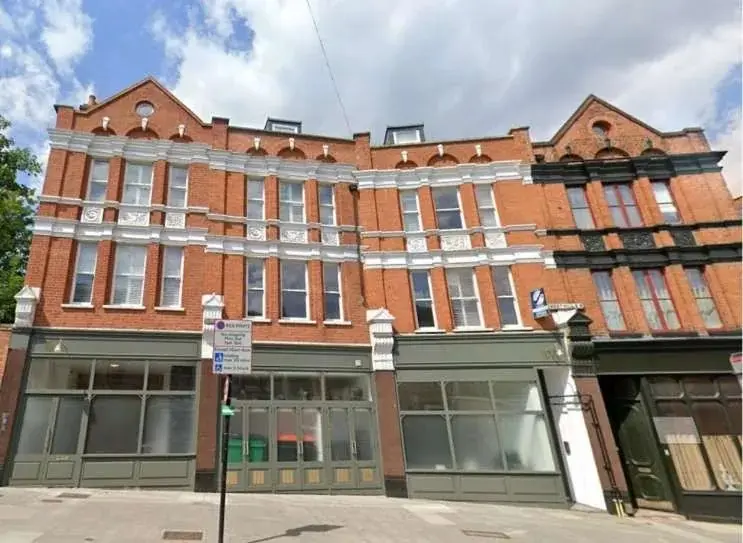
Appearance matters as much as noise. Hammersmith and Fulham refused ref 2019/01504/FUL because the enclosures were a “discordant feature”, and the borough says its 44 conservation areas cover about half its area. In a dense borough like that, our drawings show the glass and mesh heights against the street scene, and the design and access statement deals with the look head on.
How long will a London application take?
London boroughs have England’s statutory periods on gov.uk: 8 weeks for a non-major application and 13 for major development. Conservation areas can stretch that. A 2017 London Society survey counted 1,028 across the capital, and UK Padel Guide reckons a conservation area or listed building means 6 to 10 extra weeks. We check the designation on day one so your build programme starts from the right date.
How it works
- 01Tell us where you are up toSite, drawings and any council letters.
- 02Planning routePre-app, the reports and the application.
- 03BuildBase, courts and lights to the approved layout.
Who does the work
Padel Court Build is a SustainPlan Ltd service. We arrange a vetted local padel court builder for London jobs. We confirm who within 2 working days, or tell you if we can’t. Sam Guest (planning and design) and Alex Winser (the build) stay your contacts from the first call to handover, and the written quote names who does the work before anything is booked.
Is the London padel market already crowded?
It is the busiest in Britain. LTA Padel counted 297 courts in its London and South East region in July 2025, the most of any region. UK Padel Guide’s own model assumes 35 to 40% utilisation in competitive London and the South East, against 55% for an established venue elsewhere, which stretches its four-court payback from under two years to four or five. Your figures depend on your site, and we do not promise returns, but a London business plan should be tested at the lower rate. Our padel club business plan guide sets that model out in full.
Does biodiversity net gain apply to a small London site?
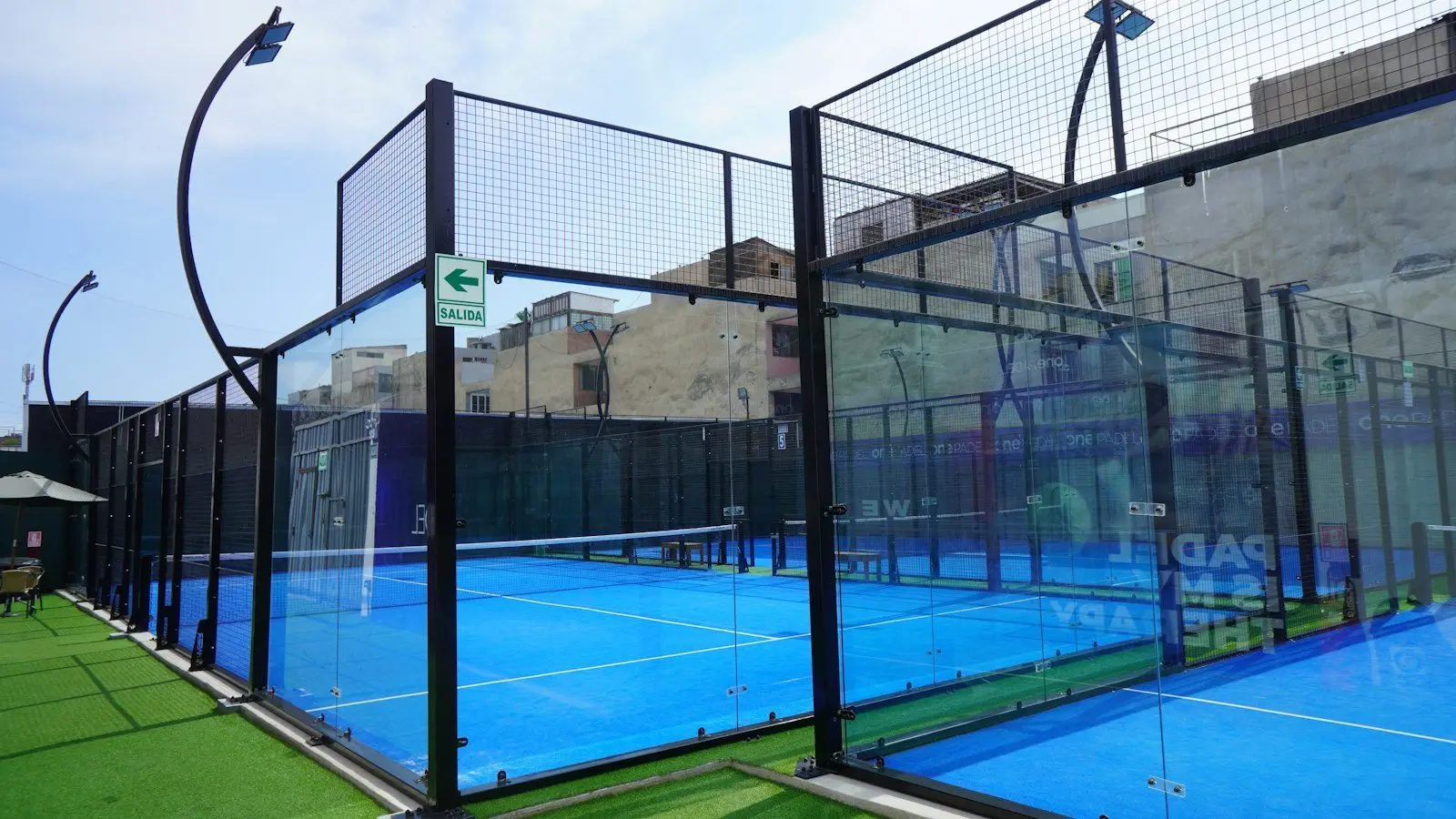
Often not. For English applications made on or after 6 August 2026, sites with a red line area of 0.2 hectares or less are exempt, as is development permitted for five years or less, where no priority habitat is affected (Planning Portal). The LTA puts a one-court enclosure at about 20.8m by 10.8m, so many tight London plots fall inside the threshold. We confirm it on your boundary. Costs, build time and court types are the same in London as anywhere else; see padel court cost for the LTA’s full table and padel court planning permission for the national rules.
Which London padel schemes has the team worked on?
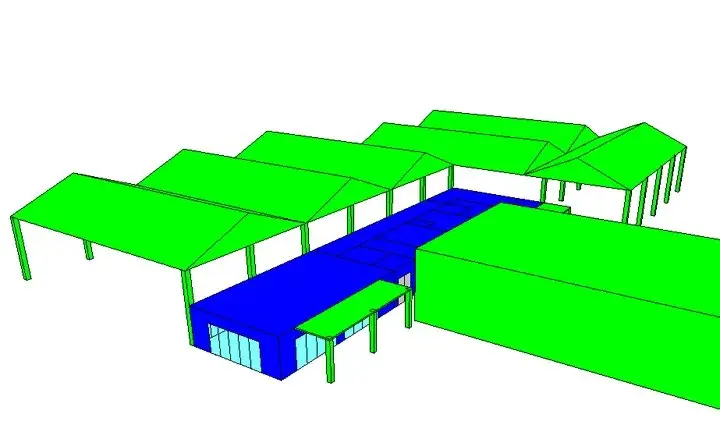
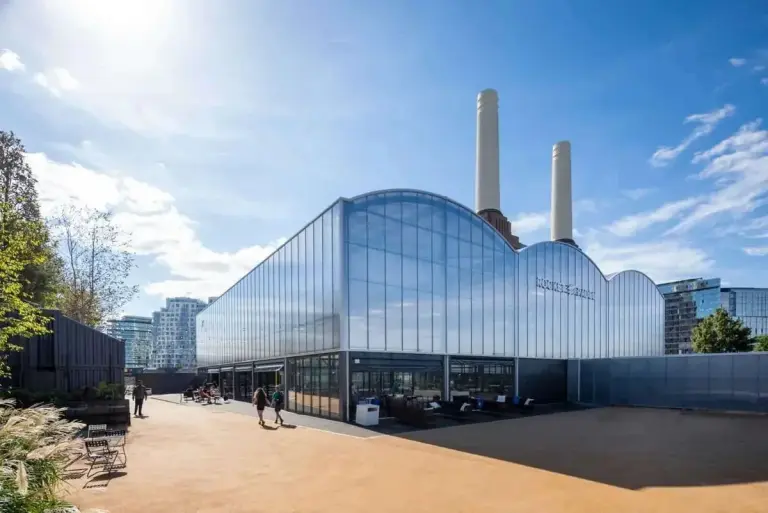
Two, both close to home for south-west London clubs. At Old Blues RFC on Arthur Road, New Malden, in the London Borough of Merton, SustainPlan prepared the energy statement, Part L model, TM52 overheating study, whole life carbon assessment and BREEAM pre-assessment for six covered courts and a clubhouse for Padel United, and revised them to answer the council’s review. The final clubhouse model sits 72.9% below the Part L 2021 carbon target. The Old Blues RFC padel case study sets out the full story. At Battersea Power Station, the circular economy assessment for Rocket Padel showed 99.96% of non-hazardous waste diverted from landfill. The Rocket Padel Battersea case study has the figures. Merton’s Local Plan, adopted in November 2024, carries climate policies CC2.1 to CC2.6, a reminder that each borough adds its own layer on top of the London Plan energy hierarchy.