Last updated October 2026
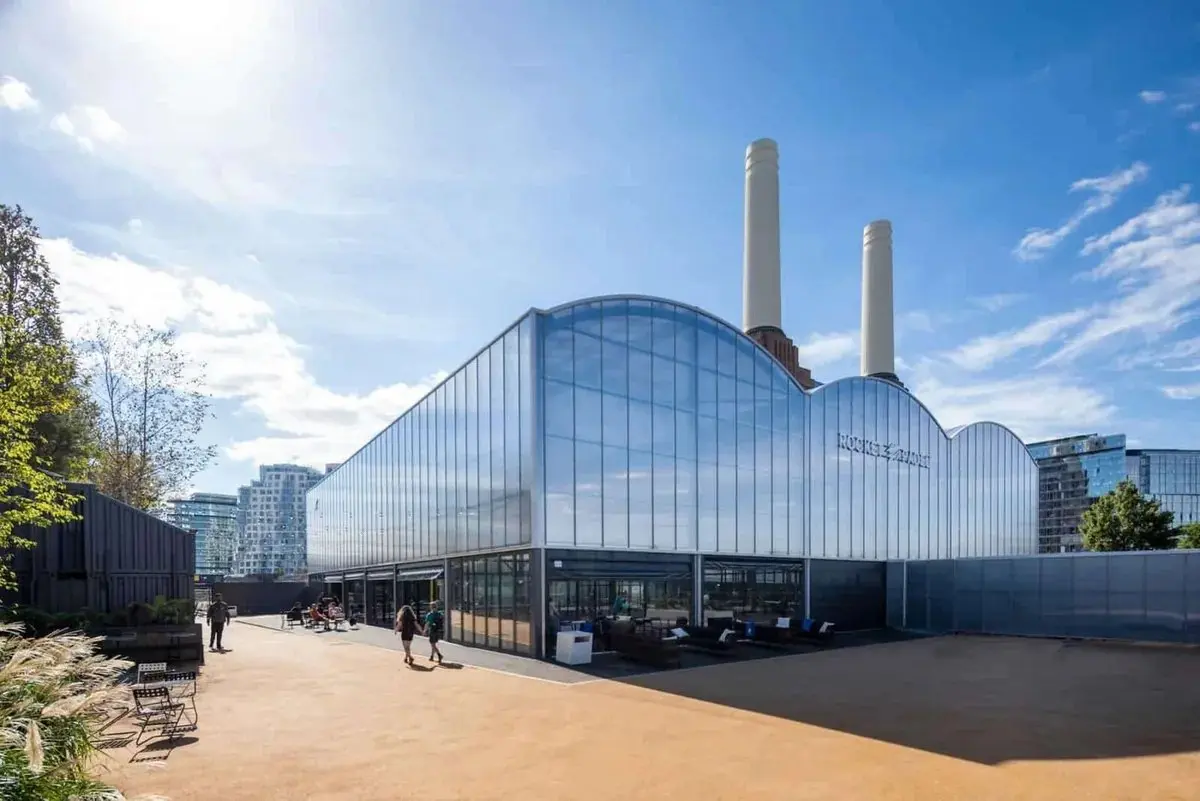
Rocket Padel’s venue is at Battersea Power Station’s Nine Elms site. SustainPlan, the sustainability consultancy in our team, carried out the post-construction circular economy assessment, measuring how much construction, excavation and demolition waste was diverted from landfill. The answer: 99.96% of all non-hazardous waste, beating the target set for the scheme.
| Measure | Result |
|---|---|
| Overall non-hazardous waste diverted from landfill | 99.96% |
| Construction and excavation waste diverted | 100% |
| Demolition waste diverted | 95.77% |
| Outcome | Target exceeded |
Why does a padel venue at Battersea need a circular economy assessment?
Because the scheme had a waste diversion target to meet, and the assessment reported against it. Battersea Power Station is the Grade II* listed former power station on the south bank of the Thames, which opened to the public on 14 October 2022 after its restoration.
For a padel operator the work is mostly paperwork done well: collecting waste transfer notes and contractor records, sorting them by waste stream, and reporting the diversion rate against the target the planning documents set.
What did the assessment measure?
Two groups of waste, reported separately:
- Construction and excavation waste: offcuts, packaging and surplus materials from building work, plus soil and spoil from ground works.
- Demolition waste: material from demolition or strip-out.
Construction and excavation waste reached 100% diversion. Demolition waste, the lower of the two, reached 95.77%. Across all non-hazardous waste the figure was 99.96%.
What does this mean for a new padel venue?
If your padel scheme sits on a large estate, is referable to the Mayor of London, or has a circular economy condition, someone has to evidence the waste figures at the end of the job. The two points that make it painless:
- Agree the targets and the evidence before work starts, so the contractor keeps the right records from day one.
- Ask for diversion rates in the contractor’s waste plan, not only a skip schedule.
At Rocket Padel the result was evidenced group by group at the end of the job. Our padel circular economy page covers both the pre-application statement and the post-construction report.
How does this fit with the rest of our padel work?
Rocket Padel sits alongside SustainPlan’s other London padel work at Old Blues RFC in Merton, where SustainPlan covered the energy statement, overheating, whole life carbon and BREEAM side of the planning application for six covered courts and a clubhouse. That job is in the Old Blues RFC padel case study.
Who does the work
Padel Court Build is a SustainPlan Ltd service. SustainPlan carries out circular economy, whole life carbon, energy and BREEAM work, inside a team that also includes planning consultants, architects and installers.
Often needed alongside
- Padel whole life carbon: the embodied carbon side of the same London policies
- Padel BREEAM assessment: where a local plan names a rating
- Wider portfolio: BREEAM and carbon work beyond padel
Sources
- SustainPlan BREEAM Project Portfolio: Rocket Padel, Battersea Power Station, post-construction circular economy assessment
- Battersea Power Station, opening date announcement, 1 Sep 2022 (Grade II* listed building, open to the public from 14 Oct 2022): https://batterseapowerstation.co.uk/news/battersea-power-station-opening-date-announcement/ (read 17 Oct 2026)