


Last updated October 2026
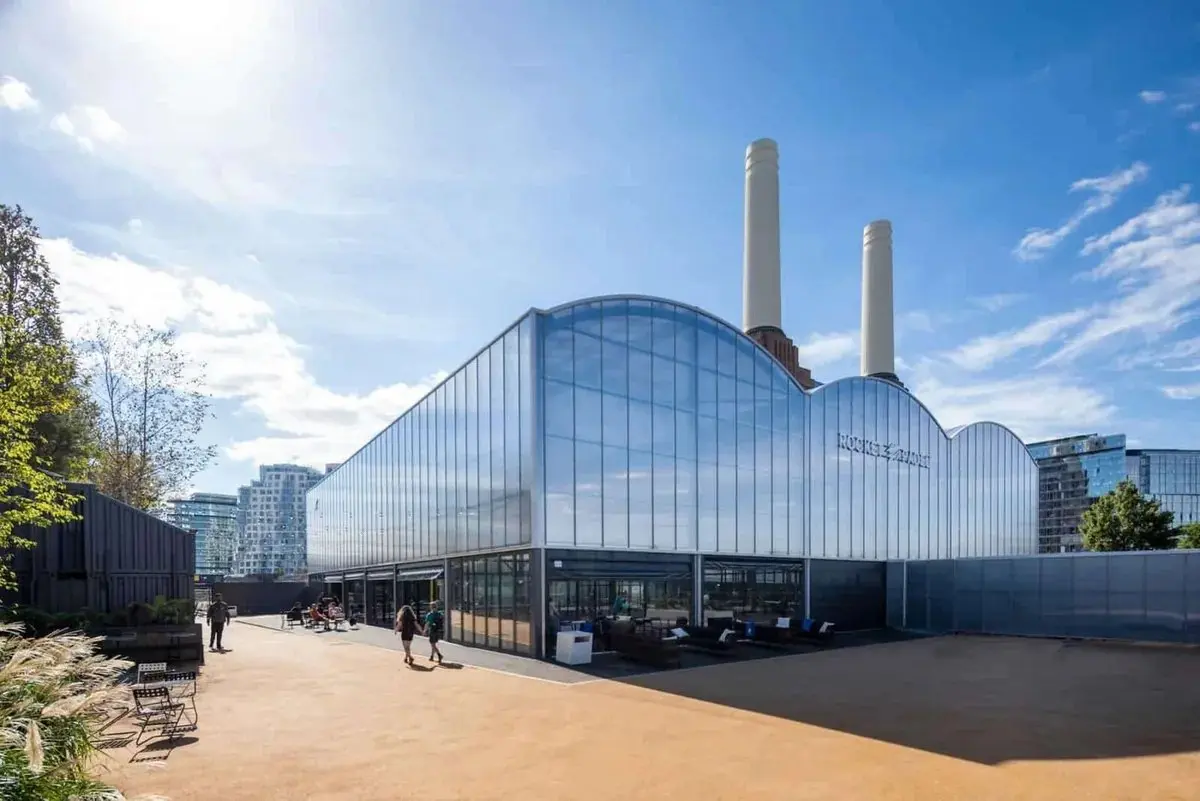
A circular economy statement shows how a padel scheme will keep materials in use and waste out of landfill, first as a plan at planning stage and then as a report of what actually happened at completion. In London it is a London Plan requirement for schemes referable to the Mayor. SustainPlan, the sustainability consultancy in our team, writes both stages. At Rocket Padel, Battersea Power Station, the post-construction assessment recorded 99.96% of non-hazardous waste diverted from landfill and the target exceeded. We quote each scheme on its scope.
| Stage | When | What the council receives |
|---|---|---|
| Planning-stage statement | With the application | Strategy for reuse, demountable design and diversion targets |
| Contractor brief | Before work starts | The records the contractor must keep, stream by stream |
| Post-construction report | At completion | Measured diversion rates against the targets |
When does a padel scheme need a circular economy statement?
In London, when the scheme is referable to the Mayor, under London Plan Policy SI 7. The GLA’s guidance also encourages boroughs to set lower local thresholds, such as major development, so some boroughs ask for one on smaller schemes. Outside London it is less common, but councils with strong climate policies are starting to ask. Your planning consultant confirms it at pre-application.
What happens at each stage?
Two stages, one before and one after:
- Pre-application or planning stage. A statement of how the scheme will be designed and built to cut waste: reusing what is on site, specifying materials that can be taken apart and reused, and setting diversion targets for construction, excavation and demolition waste.
- Post-construction. A report of what actually happened, built from the contractor’s waste records, against the targets set at planning.
At Rocket Padel the post-construction stage is where the 99.96% result was evidenced.
How it works
- 01Tell us where you are up toSite, drawings and any council letters.
- 02Planning routePre-app, the reports and the application.
- 03BuildBase, courts and lights to the approved layout.
What makes a padel scheme easier to report?
Plenty, if it is planned. Padel courts are largely prefabricated steel and glass kits on a concrete base, which makes them more demountable than a typical building, and that suits circular economy thinking. The practical points that make the final report straightforward:
- agree diversion targets with the contractor before work starts
- require waste transfer notes for every load, sorted by stream
- separate demolition waste early if an existing building or surface is being stripped out
- record any materials reused on site, such as crushed hardstanding
How does this fit with whole life carbon?
They share the same materials data. The whole life carbon assessment counts the carbon in the steel, concrete and glass; the circular economy statement sets out how those materials are sourced and what happens to them at the end of their life. One team writing both keeps the figures consistent. See padel whole life carbon.
What do you need from me?
- Drawings and a description of the works, including any demolition
- The planning condition or pre-app comments, if any
- For post-construction: the contractor’s waste records and transfer notes
What’s included
- Pre-application or planning-stage circular economy statement
- Diversion targets and a brief for the contractor on records to keep
- Post-construction report against the targets
- Coordination with the whole life carbon assessment and BREEAM waste credits
What’s not included
- Waste management on site, which is the contractor’s responsibility
- Collecting missing waste records after the job, if the contractor did not keep them
Worked example: Rocket Padel, Battersea Power Station
Rocket Padel at Battersea Power Station, assessed after construction. Construction and excavation waste was reported together at 100% and demolition waste separately at 95.77%, and the scheme beat its target. Read the Rocket Padel Battersea case study.
Who does the work
Padel Court Build is a SustainPlan Ltd service. SustainPlan writes the circular economy statement and report and works with our installers and groundworks teams on the records needed to prove the result.
Often needed alongside
- Padel BREEAM assessment: waste and materials credits
- How it works: where circular economy sits in the six steps
- Temporary padel courts: demountable courts on meanwhile sites
FAQs
Is a circular economy statement the same as a site waste plan?
No. A site waste plan is the contractor’s tool for managing waste. The circular economy statement sets the targets and reports the result to the council.
Can the report be done if records were not kept?
Only partly. Diversion rates need evidence, so agree the records before work starts.
Sources
- SustainPlan BREEAM Project Portfolio: Rocket Padel, Battersea Power Station
- London Plan 2021, Policy SI 7 Reducing waste and supporting the circular economy, and GLA Circular Economy Statement guidance (referable applications; boroughs encouraged to set lower local thresholds): https://www.london.gov.uk/publications/circular-economy-statement-guidance (read 17 Oct 2026)