


Last updated October 2026
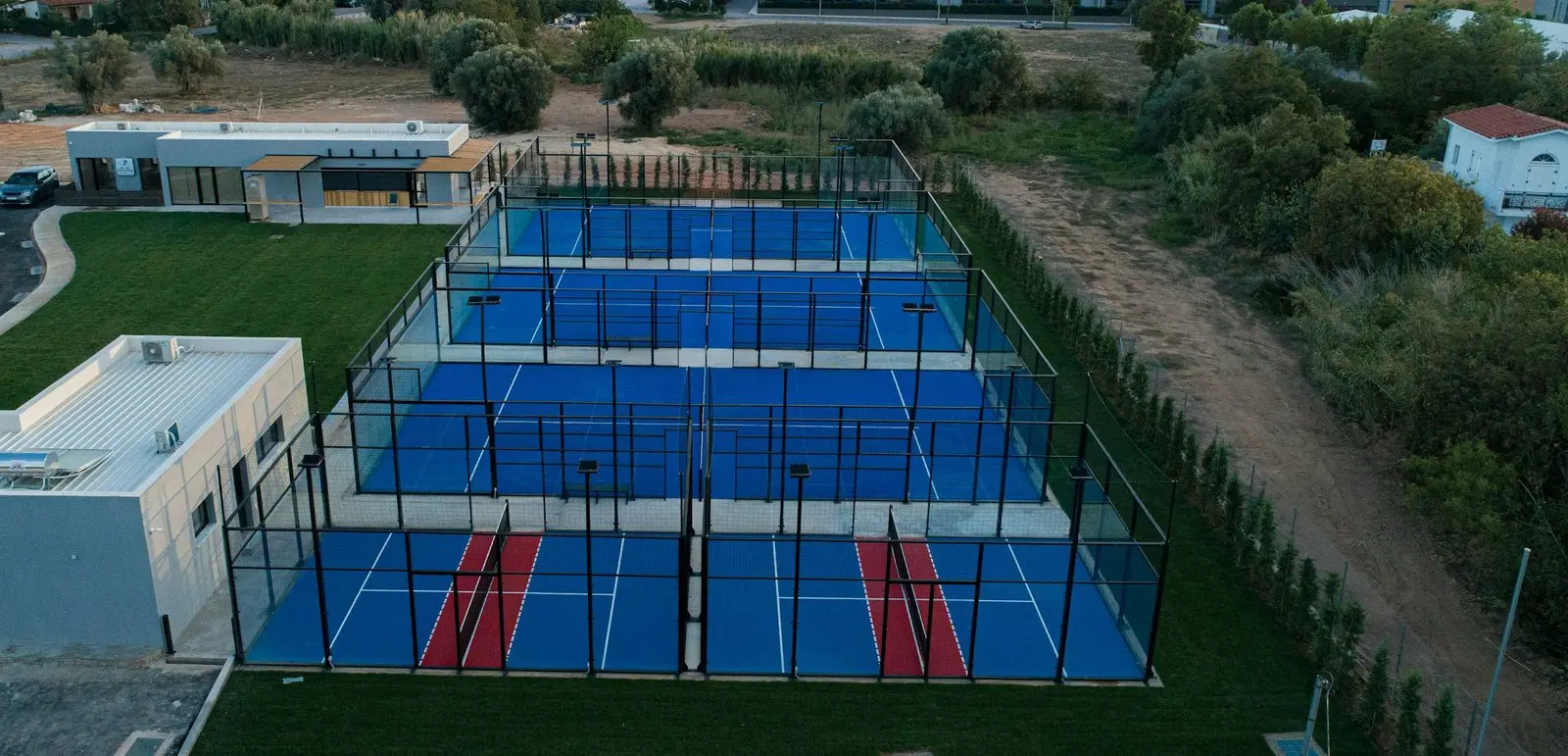
Most padel courts need planning permission, and the LTA says planning is usually left out of contractor quotes. We include it. Our planning consultants run pre-application advice, the application and the design and access statement, the noise and lighting assessments come from our consultants, and then our installers build the court. Councils in England have 8 weeks to decide a non-major application. One floodlit outdoor court costs about £71,000 to build (LTA 2025).
Planning is a small line in a padel budget, but it decides whether the court gets built at all.
| Item | Typical figure | Source |
|---|---|---|
| One outdoor floodlit court, court plus base | about £71,000 ex VAT and fees | LTA 2025 |
| One court with a canopy | about £166,000 ex VAT and fees | Our sum of LTA 2025 lines |
| Four floodlit courts with base | about £268,000 ex VAT and fees | LTA 2025 |
| Pre-application advice | £300 to £1,500 | UK Padel Guide, October 2026 |
| Planning, fees and contingency in a four-court budget | £18,000 of a £377,000 total | UK Padel Guide model, October 2026 |
| Legal decision period, non-major application (England) | 8 weeks | gov.uk, updated April 2026 |
| Legal decision period, major application (England) | 13 weeks | gov.uk, updated April 2026 |
| Conservation area or listed building | adds 6 to 10 weeks | UK Padel Guide, October 2026 |
| Our planning service, pre-app to decision | quoted for your site | Padel Court Build |
These are typical figures. The cost on your site is confirmed after we survey it.
Do I need planning permission for a padel court?
Almost certainly, yes. The LTA states that any indoor structure or canopy needs planning approval, and planning lawyers Nexa Law say outdoor padel court development “will almost always require full planning permission”. The reason is simple: a padel court is a glass and mesh enclosure 3 to 4 metres high, and most come with floodlights.
How it works for each kind of build:
- Club, school, council or commercial outdoor courts: full planning permission in nearly every case. Law firm Freeths lists new outdoor courts, fencing and glass enclosures, and floodlights as works that typically need consent.
- Covered courts and canopies: planning approval is needed (LTA). Building control may also apply to a canopy. See our padel court canopy page for heights and costs.
- Indoor courts in an existing building: permission is needed where there is a material change of use or structural work, and building control applies to fully enclosed structures (LTA and Freeths). Indoor padel sits in Use Class E(d).
- Floodlights added later: these need permission “regardless of height in most circumstances” (Nexa Law).
- Longer opening hours: if a condition limits your hours, extending them needs a fresh consent (Freeths).
- Home and garden courts: most councils treat a padel court as needing permission, so ask us to check your plot before you commit.
What do councils look at when they decide?
Noise, lighting, distance to homes and the status of the land decide most padel applications, with parking and biodiversity on some sites.
- Noise: the most common reason for refusal. Environmental health officers can object outright, as they did at Redditch.
- Lighting: spill onto windows, glare and how late the lights stay on.
- Distance to homes: the LTA guidance note says noise and light surveys are likely if a home is within 50 metres.
- Land status: Green Belt, conservation areas, playing fields and employment land each bring their own test.
- Wider impacts: greenfield sites need 10% Biodiversity Net Gain (LTA), and Sheffield required 96 parking spaces before a large indoor centre could open.
How it works
- 01Tell us where you are up toSite, drawings and any council letters.
- 02Planning routePre-app, the reports and the application.
- 03BuildBase, courts and lights to the approved layout.
Why do padel courts get refused?
Noise comes up most often, followed by Green Belt openness, loss of playing fields or employment land, and the look of the enclosures. These are real decisions from council papers and local press.
Swipe the table sideways to see every column.
| Council | Scheme | Why it failed | Date |
|---|---|---|---|
| North Yorkshire Council | 2 courts, Oakdale Place, Harrogate | Refused unanimously on noise, after an enforcement notice | 28 April 2026 |
| Redditch Borough Council | 3 floodlit courts, ref 25/00162/FUL | Recommended for refusal on noise; environmental health objected | 19 February 2026 |
| Bath and North East Somerset | 2 courts in a conservation area, ref 24/00607/FUL | Refused 6 to 4; homes 3.5m and 8.5m away | 2024 |
| Sheffield City Council | 1 club court built without permission | Refusal recommended; application withdrawn | October 2026 |
| Guildford Borough Council | Two schemes | Noise, floodlights to 10pm near a darker skies area, Green Belt | 19 June 2024 |
| City of York Council | 2 courts at a sports club | Loss of playing field land, Green Belt | April 2026 |
| Cambridge City Council | 5 floodlit courts with a canopy | Refused; a domed roof refused in the Green Belt (25/02147/FUL, per Freeths) | 4 March 2026 |
| London Borough of Barnet | Ref 25/0235/FUL | Fencing and canopies inappropriate in the Green Belt | 2025 |
| Manchester City Council | 8 indoor courts, Strangeways warehouse | Loss of employment land | July 2026 |
| Hammersmith and Fulham | Ref 2019/01504/FUL | Enclosures a “discordant feature”; noise | 2019 |
Bath is the warning for every club: officers and the environmental protection officer had accepted the acoustic report, and councillors still refused it.
Which padel schemes have been approved, and what won them?
Approvals come from distance or screening between courts and homes, hours the neighbours can live with, and lights that run only when the court is in use. Each term below was attached to a real permission.
Swipe the table sideways to see every column.
| Council | Scheme | Terms that won approval | Date |
|---|---|---|---|
| Cheshire East Council, Northern Planning Committee | 2 courts, Alderley Edge Cricket Club | 3.2m acoustic barrier on three sides, reduced hours, third court dropped; fence 14m and court 25m from the nearest home | 24 June 2026 |
| Horsham District Council | 2 covered courts, Henfield, ref DC/23/1177 | 07:00 to 21:30 weekdays, 08:00 to 17:00 weekends; lights only in use; lighting design approved | November 2023 |
| London Borough of Barnet | Ref 25/3670/FUL | Approved once the canopies came out | 2025 |
| Sunderland City Council | 4 covered courts from tennis courts, Silksworth | Daytime hours only | 28 September 2026 |
| Birmingham City Council | 8 indoor courts, Stetchford warehouse | Approved | January 2026 |
| Sheffield City Council | 14 indoor courts, Parkway Close | Five-year temporary permission; 96 parking spaces first | February 2026 |
| Belfast City Council | Indoor centre, Redcar Street | Unanimous; 07:00 to 23:00 | March 2026 |
| Croydon Council | 9 enclosed courts, Addiscombe Road | Meanwhile use for up to 10 years | Undated |
Barnet shows a refusal can become a permission: the redesign without canopies was approved.
How far from homes can a padel court be?
There is no single safe distance, but within 50 metres the LTA expects noise and light surveys, and the design has to work harder.
- 3.5m and 8.5m: refused in Bath, despite a 3m glazed screen.
- About 34m: deferred in Reigate to consider noise; residents’ own report sought 10 dB of screening.
- 14m to the fence, 25m to the court: approved at Alderley Edge with a 3.2m barrier and shorter hours.
BathNES minutes also record LTA advice that homes within 30m need noise mitigation. Our acoustic consultants test your layout against these cases before anything goes to the council.
What do councils ask you to submit?
A noise impact assessment, lighting details, drawings and a design and access statement, plus biodiversity, parking or sports land evidence where the site needs it. Portsmouth’s 2026 request on a car park scheme is typical: a noise impact assessment, lighting details and no play from 10pm to 7am.
For lighting, Belfast’s validation checklist sets the standard: beam layout, hours, a light overspill diagram with vertical lux at nearby windows, and the environmental zone under ILP Guidance Note GN01/21. Where playing fields are affected, Sport England is a statutory consultee and looks for local need and underused facilities.
What does our planning service cover?
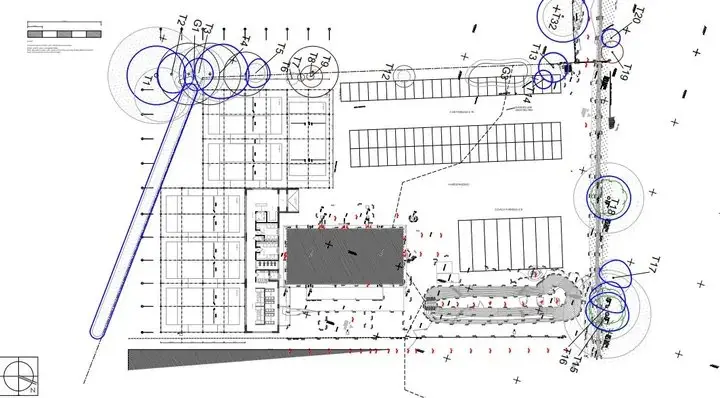
Everything from the first site check to the council’s decision, planned around your build. Our planning consultants, our noise and lighting consultants and our installers all work from the same layout, so the court that gets approved is the court that gets built.
What we prepare:
- Site check: distance to homes, land status, access and planning history.
- Pre-application advice, so objections surface before you pay for a full application.
- Drawings: layout, elevations and orientation, with open sides turned away from neighbours where possible.
- Noise impact assessment by our specialist acoustic consultants (see padel court noise assessment).
- Lighting impact assessment with a spill plan and tilt angles, by our lighting consultants (see padel court lighting).
- Design and access statement.
- The application, managed to a decision, including answers to officers and consultees.
- Conditions after approval, such as a lighting design or barrier detail: ask us about handling these too, so the build is not held up.
What reports will the council ask for with a padel clubhouse?
A clubhouse turns a court application into a building application, so the list grows. On top of the noise and lighting evidence above, expect some or all of these:
- Energy statement and Part L (SBEM/BRUKL) for the conditioned clubhouse, with the open court halls kept out of the heated model
- Overheating assessment to CIBSE TM52 for viewing and warm-up spaces
- Whole life carbon where a London scheme is referable to the Mayor
- BREEAM where the local plan names a rating for new non-domestic buildings
- Air quality evidence, which needs the clubhouse’s energy figures
SustainPlan, the sustainability consultancy in our team, writes the energy, overheating, carbon and BREEAM reports; air quality comes from our air quality consultants. How the team solved each of these at Old Blues RFC in Merton is set out on padel planning problems we solve.
How long does planning permission take?
In England the council has 8 weeks to decide a non-major application and 13 weeks for major development, unless you agree a longer period in writing (gov.uk). So a padel application in England has a legal decision period of 8 to 13 weeks, depending on its size. Scotland, Wales and Northern Ireland set their own periods. UK Padel Guide adds that a conservation area or listed building can add 6 to 10 weeks.
- Feasibility: 2 to 4 weeks (UK Padel Guide).
- Pre-app and reports: done first, so the clock starts with a complete file.
- Decision: the 8 or 13 week period, or longer where you agree an extension.
- Lighting: 8 to 12 weeks if applied for separately (UK Padel Guide), so we submit lights with the courts.
- Build: kit lead time 8 to 14 weeks, groundworks 3 to 5 weeks per phase, about a week on site per court; 6 to 9 months from the decision to build to first ball (UK Padel Guide).
Green Belt, conservation areas and playing fields: what changes?
Each adds a test on top of noise and lighting. Green Belt cases turn on openness, conservation areas on appearance and time, and playing fields bring in Sport England. Barnet, Cambridge, Guildford and York all refused on Green Belt grounds, while Sport England raised no objection at Henfield or Alderley Edge. On protected land we test an open scheme against a covered one at pre-app.
Do homeowners need permission for a garden court?
Assume so until we have checked. Most garden courts need planning permission because the walls are 3 to 4 metres high and lights need consent, and MyBuilder notes courts often need permission in residential areas or where lighting is fitted. Ask us to look at your plot and the council’s approach before you commit. Our garden padel court page covers space, cost and neighbours.
Indoor conversions: change of use and the sequential test
Turning a warehouse into a padel centre is usually a material change of use, and employment land is the main test: Manchester refused 8 indoor courts in a Strangeways warehouse, while Birmingham approved 8 in Stetchford. Freeths notes indoor courts may also need a town centre sequential test. Our indoor padel centre page covers buildings and costs.
What if a court was built without permission?
The council can stop it being used, and a retrospective application is no guarantee. At Harrogate, an enforcement notice in October 2025 ordered play to stop and a fresh application was refused in April 2026. In Sheffield, an abatement notice stopped play and the club withdrew its bid. Leeds City Council did approve four floodlit courts retrospectively, with hours of 6am to 11.30pm. If your court is already built, ask us about reviewing the position and a retrospective application.
What does the planning service cost?
We quote it for your site, because the reports needed depend on distance to homes, the land and the council. For scale, the UK Padel Guide’s four-court model sets aside £18,000 for planning, fees and contingency in a £377,000 project. Your quote shows planning and build as separate lines.
What’s included
- Site check, pre-app, drawings and the design and access statement
- Noise and lighting assessments, written by our noise and lighting consultants
- Energy statement, overheating, whole life carbon and BREEAM pre-assessment by SustainPlan, where policy requires them
- The planning application, managed to a decision
- Ask us about discharge of conditions after approval
- The court build, from groundworks to lights, by our installers
What’s not included
- Council application and pre-application fees, paid to the council and shown in your quote
- A guaranteed approval; the council decides
- Heritage, ecology or other specialist surveys, unless your site calls for them
- Building control fees for canopies and indoor structures, where they apply
Illustrative example
Built only from the table on this page; no real customer or site is described.
A members’ club wants two floodlit outdoor courts 40 metres from the nearest homes. LTA 2025 figures put two courts with lights and base at about £148,000 ex VAT and fees. With homes inside 50 metres, noise and lighting reports go in with the application after a pre-app, and in England a non-major application has an 8-week decision period. Allowing for kit lead times, the UK Padel Guide’s 6 to 9 months from the decision to build to first ball is a realistic plan.
Who does the work
Padel Court Build is a SustainPlan Ltd service. Our planning consultants lead the application, architects draw the scheme, SustainPlan writes the energy, overheating and carbon reports, and our noise and lighting consultants add their assessments where the council asks for them.
Often needed alongside
- Padel court noise impact assessment: what the acoustic report covers
- Padel court lighting: lux levels, light spill and costs
- Padel court canopy: covered courts and their planning
- Indoor padel centre: warehouse conversions and change of use
- Garden padel court: home courts and neighbours
- Temporary padel courts: meanwhile use on fixed-term permissions
- Padel court cost: build prices from the LTA
- Padel court planning decisions by area: local refusals and approvals
FAQs
Can I order the court before planning is granted?
You can, but we advise against it. Kit takes 8 to 14 weeks to arrive, so we time the order to land soon after the decision.
Can neighbours bring their own evidence?
Yes. In Reigate, residents’ own report argued for 10 dB of screening, and the committee deferred the scheme in June 2024 to consider noise.
Can opening hours be extended later?
Only with a new consent if a condition limits them (Freeths), so agree workable hours at the start.
Do I need building regulations approval as well?
For a fully enclosed structure, yes, and possibly for a canopy (LTA). We tell you which applies when we quote.
What happens if the council refuses?
We look at the reasons and the options. In Barnet the same scheme was approved once the canopies were removed.
Sources
- LTA Padel Court Construction Guidance Note 2025 and LTA Padel construction page (checked 17 Oct 2026)
- gov.uk, Determining a planning application, updated 8 April 2026
- Nexa Law, 1 May 2026; Freeths LLP, 26 May 2026; UK Padel Guide, 13 Oct 2026; MyBuilder, 21 Aug 2026
- Council papers: Redditch 25/00162/FUL; Horsham DC/23/1177; BathNES 24/00607/FUL; Reigate and Banstead 22/02353/F; Belfast validation checklist
- Press and council news for each decision: The Stray Ferret (Harrogate), Sheffield Star (Sheffield), Woking News and Mail (Guildford), YorkMix (York), Cambridge City Council and Freeths (Cambridge, Barnet, Hammersmith and Fulham), Place North West (Manchester), Place Midlands (Birmingham), alderleyedge.com (Alderley Edge), Sunderland Echo (Sunderland), Irish News (Belfast), Croydon Council news (Croydon), Yorkshire Evening Post (Leeds), The News Portsmouth (Portsmouth)