


Last updated October 2026
We build padel complexes for tennis clubs, members’ clubs and commercial operators across the UK, and we handle the planning application as part of the same job, with the noise and lighting assessments from our consultants. LTA figures from 2025 put four outdoor floodlit courts at about £268,000 ex VAT and fees, or about £584,000 with canopies. One published guide puts the whole journey, from the decision to build to first ball, at 6 to 9 months.
The base, ring beam and drainage cost about as much as the courts themselves, so a club budget built on kit prices alone will fall short.
Swipe the table sideways to see every column.
| Courts | Courts with lights | Ring beam, base, ducting and drainage | Outdoor total | Canopy total | Covered total |
|---|---|---|---|---|---|
| 1 | £36,000 | £35,000 | £71,000 | £95,000 | £166,000 |
| 2 | £70,000 | £78,000 | £148,000 | £170,000 | £318,000 |
| 3 | £100,000 | £110,000 | £210,000 | £248,000 | £458,000 |
| 4 | £128,000 | £140,000 | £268,000 | £316,000 | £584,000 |
All figures are typical LTA lines. We confirm the price for your club’s site after a survey.
What does a four-court padel club cost to build?
A four-court outdoor club with floodlights costs about £268,000 ex VAT and fees on the LTA’s 2025 figures, before any canopy, clubhouse or car park. The UK Padel Guide (13 October 2026) models a four-court venue on existing hardstanding at about £377,000 all in, adding fencing, a basic clubhouse, booking software, planning, fees and contingency.
How long does it take from site to opening?
Allow 6 to 9 months from the decision to build to first ball, according to the UK Padel Guide. The stages, from the same guide unless marked:
- feasibility: 2 to 4 weeks
- planning: in England the council has 8 weeks to decide a non-major application and 13 weeks for major development (gov.uk); the guide adds 6 to 10 weeks in a conservation area
- court kit lead time: 8 to 14 weeks from order
- groundworks: 3 to 5 weeks per phase
- installation: about 1 week per court, so 2 to 3 weeks on site for four
- commissioning: 1 to 2 weeks
Planning and the kit lead time take longest. Ask us about timing the court order around the planning decision, so the wait is as short as your risk allows.
How it works
- 01Tell us where you are up toSite, drawings and any council letters.
- 02Planning routePre-app, the reports and the application.
- 03BuildBase, courts and lights to the approved layout.
Is a padel club profitable?
It can be, but returns depend on how busy the courts are. The UK Padel Guide’s own model has a four-court venue paying back in about 1.8 years at 55% court use, stretching to four to five years at 35 to 40% use in a competitive market. That is someone else’s estimate, not a promise from us.
The model uses a blended court rate of £28 an hour, and it expects a new venue to start near 25% use in month three. Our padel club business plan guide sets out capex and running costs line by line.
Independent club or franchise: what does the build cost either way?
Much the same, because a franchise site still needs a base, courts, lights and planning permission, so the LTA lines above apply either way. A franchise adds its own fees and often its own court specification; ask the franchisor for both before comparing quotes.
A brand does not bring planning certainty. Cambridge City Council refused a five-court floodlit scheme with a canopy at Cambridge Rugby Union Club, applied for by Padel Stars Ltd, on 4 March 2026. Ask us about building to a franchisor’s court specification; our planning team shapes the application around whichever court you choose.
Outdoor, covered or indoor: which should a club build first?
Outdoor is cheapest, at about £71,000 a court (LTA). A canopy adds about £95,000 a court, and indoor courts cost £40,000 to £70,000 each before the building (UK Padel Guide).
Covered courts can be booked in the rain, and the LTA’s Facility Loan Scheme prioritises them, but canopies always need planning approval. See padel court canopy for covered courts and indoor padel centre for building conversions.
What kills club schemes at planning?
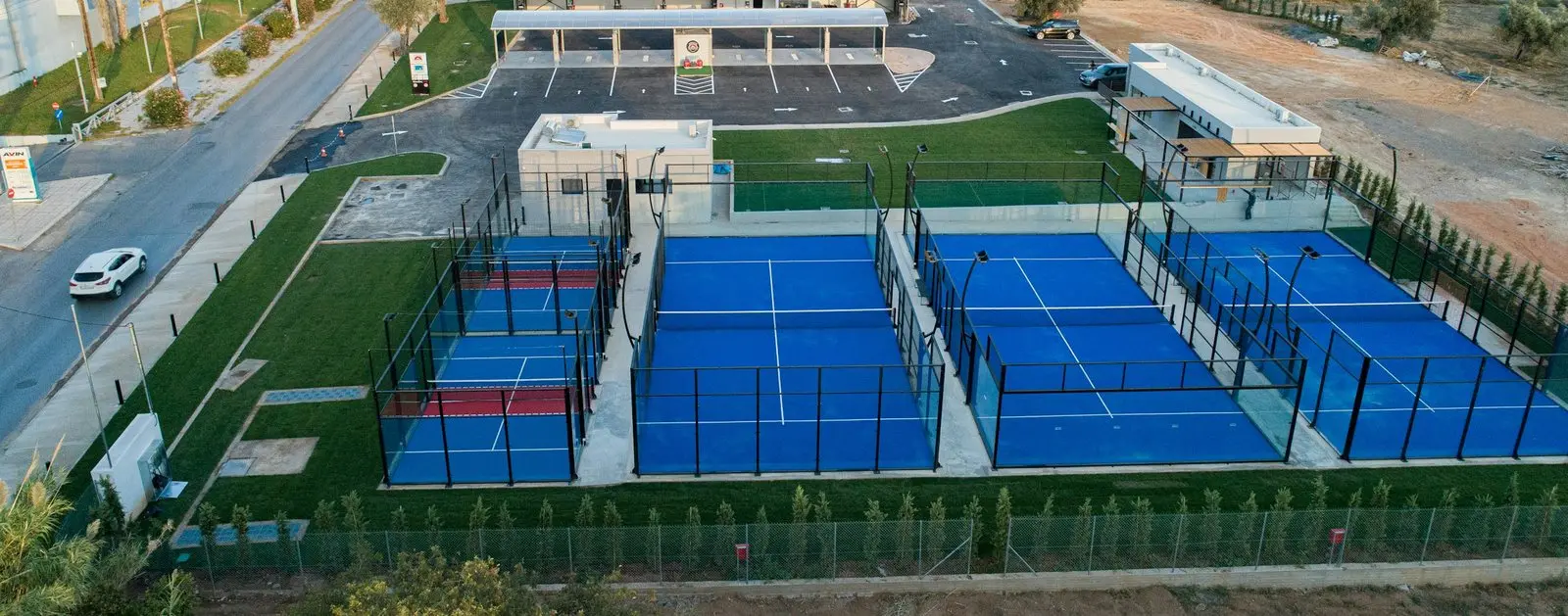
Noise first, then Green Belt and conservation objections:
- Harrogate: North Yorkshire Council refused two David Lloyd courts again on 28 April 2026, unanimously, on noise. An enforcement notice had already ordered the courts out of use.
- Bath: Bath and North East Somerset refused two courts at a Lansdown club 6 to 4 on residential amenity. Homes were 3.5m and 8.5m away.
- Barnet: a scheme with canopies was refused as inappropriate in the Green Belt (25/0235/FUL), then approved once the canopies were removed (25/3670/FUL).
Schemes that won were designed around the neighbours. Alderley Edge Cricket Club got two courts approved on 24 June 2026 with a 3.2m acoustic barrier on three sides, reduced hours, and 25m between court and nearest home.
Our quote includes the padel court planning permission work that contractor quotes usually leave out (LTA).
How do members’ clubs fund a build?
A properly constituted not-for-profit club can apply to the LTA Facility Loan Scheme. It lends at 5% fixed, prioritises covered courts, and asks for security of tenure, LTA registration on completion, a sustainability plan and a sinking fund. It excludes individuals and companies limited by shares, so commercial operators need their own finance.
Applicants need at least three quotes; our padel court funding guide covers the other routes.
Can we start with two courts and add more later?
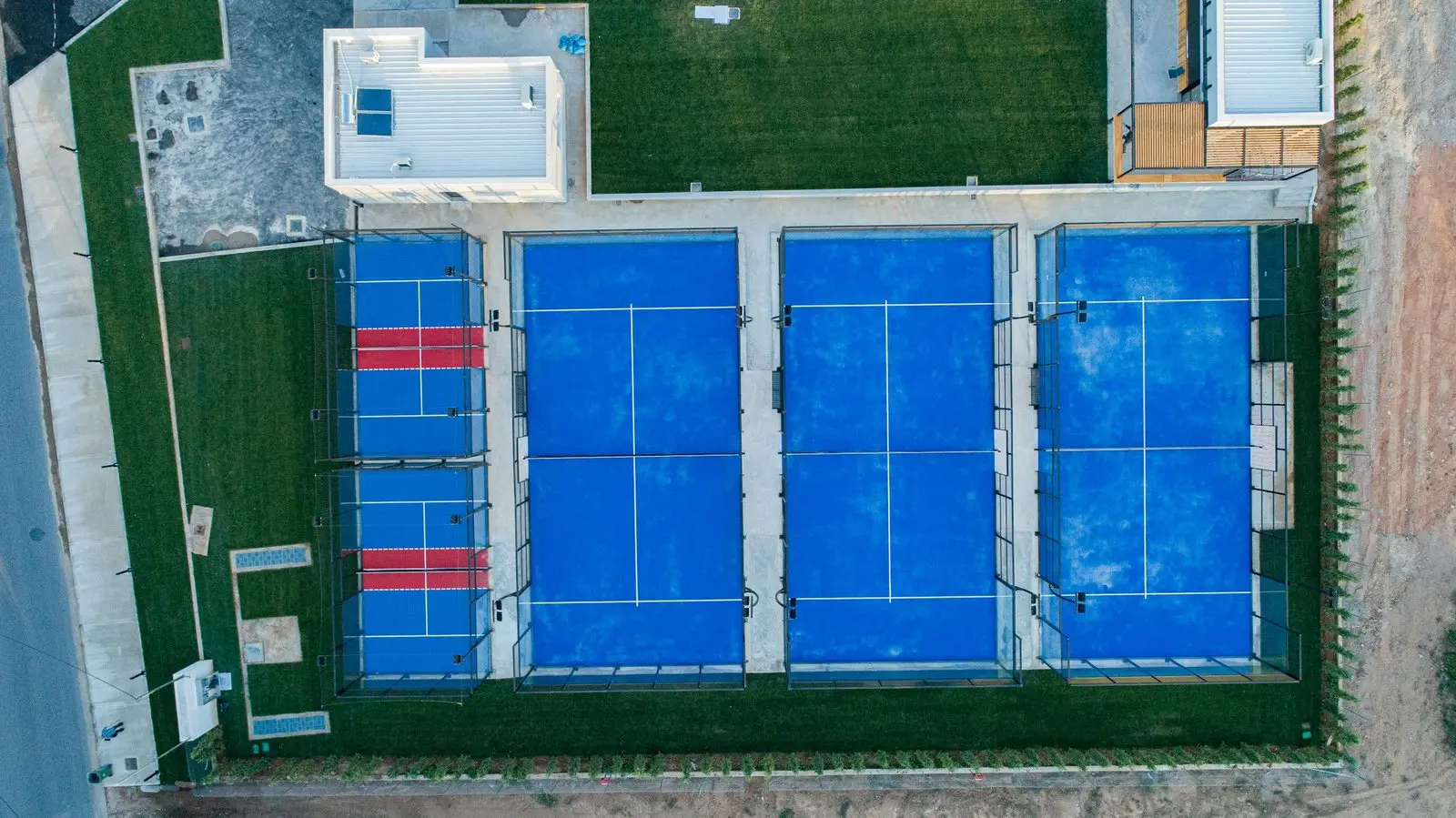
Yes. Two outdoor floodlit courts cost about £148,000 (LTA). Design the first phase for the last one: full court layout, power, drainage and footings for any future canopy. A later canopy needs its own permission, and Barnet shows it can be the part a council refuses, so test it at pre-application stage.
What’s included
- A site check and layout for one court or a full complex
- Planning: pre-app, application and design and access statement, plus noise and lighting reports from our consultants
- Groundworks: base, ring beam, ducting and drainage
- Courts supplied and installed, with turf and LED floodlights
- Canopies, where your scheme and the permission allow them
- One point of contact from enquiry to handover
What’s not included
- Clubhouse, car park, booking software and fit-out, unless quoted separately
- Planning, building control and other council fees
- Franchise fees or brand costs
- Grid connection upgrades
- VAT, which our quotes list as its own line
Illustrative example
Built only from the LTA 2025 table above. Not a real club.
A club builds four outdoor floodlit courts for about £268,000 ex VAT and fees. Two years later it covers two of them; the LTA two-court canopy line is about £170,000, which takes the total spend to about £438,000. On the LTA’s advice it also sets aside £1,500 per court per year for resurfacing and lamps, which is £6,000 a year for four courts.
Who does the work
Padel Court Build is a SustainPlan Ltd service. Operators get one team for the whole club: architects, planning consultants, SustainPlan for the clubhouse energy, overheating and carbon reports, BREEAM assessors and installers. See the Old Blues RFC padel case study for a six-court club with a clubhouse. Our planning team runs the pre-app and application, our acoustic consultants prepare the noise report, and our installers build the base, courts and lights.
Often needed alongside
- Padel court cost: every price line for one court to a full club
- Padel court canopy: covered courts and what they add
- Indoor padel centre: indoor courts for a club’s second phase
- Convert tennis court to padel: reusing club tennis courts
FAQs
Do you build for commercial operators as well as members’ clubs?
Yes. We build for tennis and sports clubs, members’ clubs, commercial operators and investors anywhere in the UK.
How much space do four courts need?
The LTA enclosure for four courts in a row is 20.80m by 45.3m, before access, paths and lights.
What will it cost to keep the courts running?
The LTA suggests a sinking fund of £1,500 per court per year and puts LED lighting at about £1 per hour per court.
Sources
- LTA Padel Court Construction Guidance Note 2025 and Data Sheet: costs, sinking fund, LED running cost, footprint (read 17 Oct 2026)
- Planning excluded from most contractors’ quotations; canopies need planning: LTA Padel Court Construction Guidance Note 2025 (read 17 Oct 2026)
- Four-court model, timings, payback and utilisation: UK Padel Guide, 13 Oct 2026 (secondary; its own model)
- LTA Facility Loan Scheme: lta.org.uk (read 17 Oct 2026)
- Planning decisions: Stray Ferret (Harrogate, 28 Apr 2026), BathNES minutes (Bath), Freeths (Barnet), alderleyedge.com (24 Jun 2026), Cambridge City Council (4 Mar 2026)